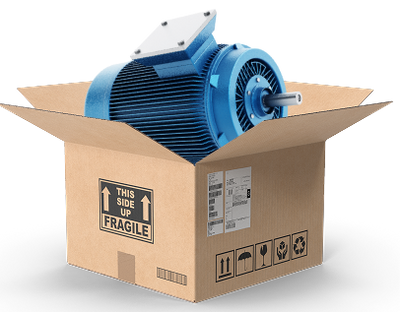
Selecting the right electric motor starts with understanding your application. Ask what the motor has to do: drive a pump, power a conveyor, run a fan or compressor, or move air in an HVAC system. Each use case has different torque curves, starting requirements and duty cycles, as defined in industry standards and manufacturer data, which is why the collection includes general-purpose, HVAC, pump and definite-purpose designs.
Next, match the power and electrical supply. Horsepower (or kW), voltage and phase must line up with your existing power source and driven equipment according to the motor’s nameplate ratings. For example, many homes and small workshops rely on single-phase 115–230 V motors, while larger commercial and industrial facilities typically run three-phase 208–575 V equipment for higher efficiency and power density.
Finally, consider environment and enclosure. Open drip proof (ODP) motors work well in clean, dry areas. Totally enclosed fan-cooled (TEFC) or washdown motors are better where dust, moisture or spray are present. Explosion-proof or stainless-steel designs are essential in hazardous or corrosive locations, in line with NEMA and IEC enclosure standards. Matching the enclosure to the environment follows good engineering practice, protects the motor and helps extend its lifespan.


![BALDOR, EHM3615T-5, 5 HP, 1800 RPM, 575V, HVAC, FR:184T, 36M965S551G1 - HVAC ELECTRIC MOTOR - BALDOR - electric motors - [product_tags]- motor electric - moteur électrique - moteurs - drive - replacement - venmar - hvac - méchoui - capacitor - condensateur](//www.emotornations.com/cdn/shop/products/BALDOR_ABB_EHM3615T-5.jpg?v=1756481069&width=460)
![B386, A.O SMITH, CENTURY, 5 HP SPL, 3450 RPM, 208-230V, D5CM1K14, COMPRESSOR - COMPRESSOR MOTORS - CENTURY - electric motors - [product_tags]- motor electric - moteur électrique - moteurs - drive - replacement - venmar - hvac - méchoui - capacitor - condensateur](//www.emotornations.com/cdn/shop/products/B386_CENTURY.jpg?v=1756481071&width=460)
![B386, A.O SMITH, CENTURY, 5 HP SPL, 3450 RPM, 208-230V, D5CM1K14, COMPRESSOR - COMPRESSOR MOTORS - CENTURY - electric motors - [product_tags]- motor electric - moteur électrique - moteurs - drive - replacement - venmar - hvac - méchoui - capacitor - condensateur](//www.emotornations.com/cdn/shop/products/LOGO_A.O_SMITH_63105e34-0079-4c3d-b12e-2cc6932b873c.jpg?v=1756481071&width=460)
![AO SMITH, RAL1024, 1/4 HP, 1625 RPM, 115V, K055RJP2173011B, NAL1024, - HVAC ELECTRIC MOTOR - CENTURY - electric motors - [product_tags]- motor electric - moteur électrique - moteurs - drive - replacement - venmar - hvac - méchoui - capacitor - condensateur](//www.emotornations.com/cdn/shop/products/RAL1024_CENTURY_AO_SMITH.jpg?v=1756481075&width=460)
![BALDOR, EHM3615T-5, 5 HP, 1800 RPM, 575V, HVAC, FR:184T, 36M965S551G1 - HVAC ELECTRIC MOTOR - BALDOR - electric motors - [product_tags]- motor electric - moteur électrique - moteurs - drive - replacement - venmar - hvac - méchoui - capacitor - condensateur](http://www.emotornations.com/cdn/shop/products/BALDOR_ABB_EHM3615T-5.jpg?v=1756481069&width=460)
![B386, A.O SMITH, CENTURY, 5 HP SPL, 3450 RPM, 208-230V, D5CM1K14, COMPRESSOR - COMPRESSOR MOTORS - CENTURY - electric motors - [product_tags]- motor electric - moteur électrique - moteurs - drive - replacement - venmar - hvac - méchoui - capacitor - condensateur](http://www.emotornations.com/cdn/shop/products/B386_CENTURY.jpg?v=1756481071&width=460)
![B386, A.O SMITH, CENTURY, 5 HP SPL, 3450 RPM, 208-230V, D5CM1K14, COMPRESSOR - COMPRESSOR MOTORS - CENTURY - electric motors - [product_tags]- motor electric - moteur électrique - moteurs - drive - replacement - venmar - hvac - méchoui - capacitor - condensateur](http://www.emotornations.com/cdn/shop/products/LOGO_A.O_SMITH_63105e34-0079-4c3d-b12e-2cc6932b873c.jpg?v=1756481071&width=460)
![AO SMITH, RAL1024, 1/4 HP, 1625 RPM, 115V, K055RJP2173011B, NAL1024, - HVAC ELECTRIC MOTOR - CENTURY - electric motors - [product_tags]- motor electric - moteur électrique - moteurs - drive - replacement - venmar - hvac - méchoui - capacitor - condensateur](http://www.emotornations.com/cdn/shop/products/RAL1024_CENTURY_AO_SMITH.jpg?v=1756481075&width=460)