HVAC MOTORS

HVAC MOTORS

(630 products)

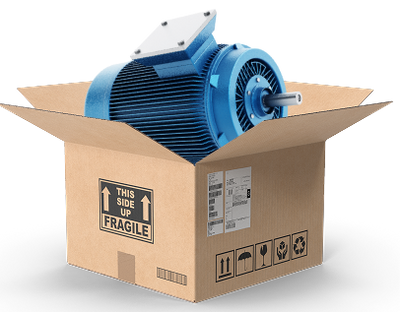
E-Motor Nations supplies high-quality HVAC motors for blowers, condensers, and evaporators, delivering dependable performance for every climate system.

View as

Worldwide

CTA Image

shipping

Why Choose E-Motor Nations for Your HVAC Motors?

At E-Motor Nations, HVAC motors aren’t an add-on, they’re a core part of our catalog. Whether you’re replacing a failed blower motor, upgrading to ECM efficiency, or matching an OEM condenser fan motor, we help you select a motor that fits your application, mounting, and electrical specs so your system gets back online with minimal downtime.

HVAC-specific selection expertise

HVAC motors are all about airflow performance and fitment: RPM, rotation (CW/CCW), shaft length, mounting style, and enclosure matter as much as horsepower. Share a photo of the nameplate and we’ll help you match the right replacement, especially when the original model is obsolete or hard to source.

Curated catalog with filters that actually help

Browse 600+ HVAC motors across the most common HVAC/R categories (condenser fan, blower, evaporator, fan coil, unit bearing, ventilation, and ECM). Filter quickly by key specs like voltage, speed, frame, and application to find compatible replacements without scrolling endless lists.

OEM replacement options for fast, clean installs

Our HVAC collection includes OEM replacement motors designed to match original specifications for a seamless swap, reducing the risk of mechanical rework, wiring surprises, or airflow issues after installation.

Canadian distribution with shipping across Canada, the USA, and worldwide

Based in Canada, we ship HVAC motors and replacement parts across Canada, United States, and we also support worldwide shipping so contractors and facilities can reduce lead times and avoid extended outages, especially during peak heating and cooling season.

Key Takeaways: HVAC Motors at E-Motor Nations

Built around real HVAC applications

Condenser fan, blower, evaporator, fan coil, unit heaters, ventilation organized so you can shop by equipment type, not just motor theory.

Replacement made easier with practical filters

Find the right motor faster by narrowing down voltage, RPM, frame/mounting, and application-specific details (shaft, rotation, enclosure).

ECM efficiency options available

Choose ECM motors for variable speed control, quiet operation, and energy savings where your system supports it.

Support for cross-referencing and fit confirmation

If you’re unsure what you need, E-MOTOR NATIONS specialists help you read nameplate data, cross-reference obsolete models and choose the best match before you order.

What to Look for When Choosing an HVAC Motor

Start with the application: a condenser fan motor doesn’t live the same life as an indoor blower motor. Outdoor units face heat, moisture, and weather; evaporator motors may run in cold, humid environments; ventilation motors may run continuously in commercial spaces.

Next, match the electrical supply: voltage and phase must align with your equipment. Then confirm the performance and fit: RPM, rotation, mounting style, and shaft dimensions. In HVAC, a “close enough” motor can cause airflow problems, noise, overheating, or premature failure.

Finally, consider the environment and protection: outdoor condenser units and refrigeration equipment benefit from robust construction and appropriate bearing/enclosure choices small details that significantly impact reliability.
Understanding HVAC Motor Specs

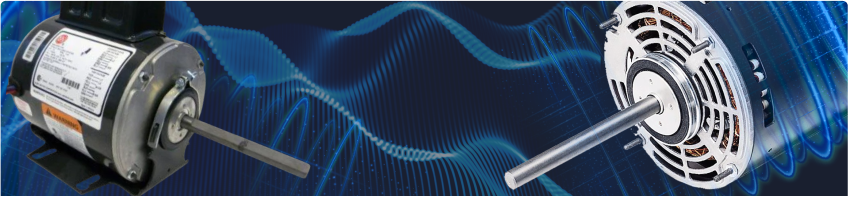
A motor nameplate gives you the replacement roadmap. For HVAC motors, these are the specs that most often decide success or failure :

- Horsepower (HP) / Output: enough power to move air without overheating under load.
- Voltage & Phase: must match your system supply.
- Speed (RPM): common HVAC speeds affect airflow and system performance.
- Rotation (CW/CCW): wrong rotation can reduce airflow or prevent proper operation.
- Frame / Mounting / Shaft: determines physical fit, bolt pattern, shaft length/diameter, and mounting type.
- Enclosure & Duty: important for outdoor, high-humidity, or continuous-duty ventilation applications.

Popular HVAC Motor Types

Use these categories to shop faster and avoid mismatched replacements:

- Condenser Fan Motors : Reliable airflow for outdoor condenser coils in A/C, refrigeration, and heat pumps.
- Fan & Blower Motors : Built for continuous duty, quiet operation, and consistent airflow in furnaces and air handlers.
- ECM Motors : Electronically commutated motors for high efficiency and variable speed control (ideal for comfort + energy savings).
- Evaporator Motors : Designed for consistent airflow across the evaporator coil, including cold environment use cases.
- Fan Coil Motors : Precise air circulation for fan coil units in residential and commercial comfort systems.
- C-Frame / Skeleton Motors : Compact motors for tight installs (fans, blowers, small machinery).
- Unit Bearing Motors : Integrated bearing system for quiet, low-maintenance operation in HVAC/R equipment.
- Unit Heater Motors : Rugged motors for reliable heat distribution in commercial/industrial heaters.
- Ventilation Motors : Continuous, efficient air exchange for indoor air quality and building balance.
- OEM Replacement Motors : Spec-matched replacements to reduce install time and minimize surprises.

FAQ

What is a HVAC motor?

An HVAC motor is an electric motor designed to drive airflow components in heating and cooling equipment such as blowers, condenser fans, evaporator fans, fan coils, unit heaters, and ventilation fans so the system can transfer heat and maintain comfort.

What are the 4 types of HVAC compressors?

The four most common HVAC compressor types are reciprocating (piston), scroll, screw (rotary), and centrifugal each designed for different capacities and efficiency needs:

- Reciprocating (Piston) Compressor: Uses a piston-and-cylinder action to compress refrigerant; common in smaller residential and light commercial systems.
- Scroll Compressor: Compresses refrigerant using two spiral-shaped scrolls; known for quiet operation, high reliability, and strong efficiency in many modern HVAC units.
- Screw (Rotary) Compressor: Uses two interlocking helical rotors to compress refrigerant continuously; ideal for larger commercial applications requiring stable performance and long duty cycles.
- Centrifugal Compressor: Uses a high-speed rotating impeller to increase refrigerant pressure; typically found in high-capacity chillers and large building systems where efficiency at scale matters.

How long do HVAC motors last?

Lifespan varies by duty cycle, environment, and maintenance, but many blower motors are often cited in the ~10–20 year range in typical residential conditions. Extreme heat, restricted airflow, and moisture can shorten life.

What are signs of a failing ECM motor?

Common signs include weak or inconsistent airflow, intermittent operation, unusual noises, overheating indicators (burnt smell/discoloration), or a blower that won’t start reliably.

What is a condenser fan motor?

A condenser fan motor powers the fan in the outdoor condenser unit (A/C, heat pump, or refrigeration) to pull air through the condenser coil and help release heat. Because it runs outdoors, it’s built to handle heat, moisture, and weather exposure. When replacing one, matching key specs like voltage, RPM, rotation (CW/CCW), shaft length, mounting style, and enclosure is essential to maintain proper airflow and system performance.

Sources

Sources

E-Motors Nations – Electric Motors collection (catégories & usages)
https://www.emotornations.com/collections/electric-motors

ABB – Motor Nameplate Guide (lecture de la plaque signalétique, puissance, tension, duty, etc.)
https://library.e.abb.com/public/8c335e0214cb48e0b8a567a95d75f1bc/Motor_nameplate_guide.pdf

NEMA – MG-1 Motors and Generators (terminologie, types d’enveloppes ODP/TEFC, standards nord-américains)
https://www.nema.org/standards/view/nema-mg-1-motors-and-generators

Schneider Electric – Duty Cycle S1–S4 Explained (définition des cycles de service)
https://www.se.com/ww/en/faqs/FAQ000221891/

Grainger – Electric Motor Buying Guide (critères pratiques de sélection : application, alimentation, environnement)
https://www.grainger.com/know-how/equipment-information/kh-electric-motor-buying-guide

EASA – Electric Motor Troubleshooting Basics (recommandations fiabilité & environnement)
https://www.easa.com/

ABB – Motor Nameplate Guide
Pour le rôle de la nameplate, les données de puissance/tension/vitesse/duty.
https://library.e.abb.com/public/8c335e0214cb48e0b8a567a95d75f1bc/Motor_nameplate_guide.pdf

NEMA – MG-1 Motors and Generators
Pour les définitions normalisées (frame sizes, synch speeds, types d’enveloppes, etc.).
https://www.nema.org/standards/view/nema-mg-1-motors-and-generators

Grainger – Electric Motor Buying Guide
Pour les impacts pratiques d’une mauvaise tension/phase, le dimensionnement et la fiabilité.
https://www.grainger.com/know-how/equipment-information/kh-electric-motor-buying-guide

EASA – Electric Motor Troubleshooting Basics
Pour les risques de surchauffe, de défaillance prématurée et les bonnes pratiques de remplacement.
https://www.easa.com/

Fitzgerald & Kingsley’s Electric Machinery – manuel universitaire de référence sur les machines AC et DC, leur principe et leurs usages.
https://www.mheducation.com/highered/product/fitzgerald-and-kingsleys-electric-machinery-umans.html?viewOption=student

Stephen J. Chapman – Electric Machinery Fundamentals – manuel qui détaille notamment les différences d’applications entre moteurs AC et DC et le rôle des variateurs.
https://books.google.com/books/about/Electric_Machinery_Fundamentals.html?id=wyHAuQAACAAJ

Marathon Electric – Electric Motors (portfolio AC & DC pour l’industrie) – illustre que la plupart des applications générales utilisent des moteurs AC, les DC étant réservés à des besoins spécifiques de contrôle.
https://www.marathonelectric.com/electric-motors

WEG – Electric Motors / Specification Guides – documentation fabricant sur les familles de moteurs AC, DC et leurs domaines d’application.
https://static.weg.net/medias/downloadcenter/ha0/h5f/WEG-motors-specification-of-electric-motors-50039409-brochure-english-web.pdf

E-Motors Nations – Electric Motors collection – pour l’alignement avec les catégories réellement vendues (majoritairement AC pour HVAC, pompes, compresseurs, etc.).
https://www.emotornations.com/collections/electric-motors

IEC 60034-1 – Duty cycle classification (S1, S2, S3, S4, etc.)
Résumés / applications :
https://electrical-engineering-portal.com/10-duty-types-three-phase-asynchronous-motors
https://www.engineeringtoolbox.com/iec-duty-cucles-d_739.html
https://www.electricalje.com/2018/06/motor-duty-class-and-its-classification.html


IEC 60034-30-1 – IE efficiency classes (IE1, IE2, IE3, IE4)
ABB technical note on IEC 60034-30-1: https://library.e.abb.com/public/db64d153e3c346938e18916e66fb1d0d/9AKK107319%20EN%2005-2018_20848_ABB_Technical_note_IEC_60034_30_1.pdf
AVSLD summary of IEC 60034-30-1: https://avsld.com.sg/iec-60034-30-standard-on-efficiency-classes-for-low-voltage-ac-motors/

NEMA Premium® & DOE motor efficiency rules
NEMA Premium program: https://www.nema.org/standards/Technical/NEMA-Premium
DOE / NEMA joint recommendations and updated motor rule:
https://www.nema.org/news-trends/view/department-of-energy-issues-motor-efficiency-standards-based-on-recommendations-from-joint-stakeholders
https://www.pumpsandsystems.com/what-users-should-know-about-department-energys-latest-motor-rules

EASA – Motor protection & reliability
Resource library – motor protection: https://easa.com/resources/resource-library/category/motor-protection-2
“Getting the Most From Your Electric Motors” (reliability & protection focus): https://easa.com/resources/resource-library/increasing-motor-reliability

ABB – How to read a NEMA motor nameplate (rôle des infos de plaque pour installer, réparer ou remplacer un moteur)
https://new.abb.com/news/detail/80778/how-to-read-a-nema-motor-nameplate

NEMA – MG-1 Motors and Generators (référentiel de standards NEMA pour moteurs, nameplate, tensions, frames, etc.)
https://www.nema.org/docs/default-source/standards-document-library/ansi_nema-mg-1-2016-contents-and-foreword.pdf

HECO – NEMA Standards Electric Motor Frame (ebook sur la lecture des NEMA frame sizes pour le remplacement)
https://hecoinc.com/wp-content/uploads/2023/08/NEMA-standards-electric-motor-frame-Ebook-V3.pdf

Regal Rexnord – Motor Frame Size Chart (Quick Reference)
https://www.regalrexnord.com/products/regal-rexnord-electric-motors/quick-reference-motor-dimensions

EASA – Electric Motors: Repair or Replace? (outil décisionnel sur réparer vs remplacer, utilisé comme cadre “industrie”)
https://universalrewind.com/wp-content/uploads/2023/07/EASA_RepairReplace_SalesTool_0821.pdf

EASA – Electromechanical Resource Center
https://easa.com/erc

E-Motor Nations – Electric Motors collection (filtres par HP, RPM, voltage, frame, etc.)
https://www.emotornations.com/collections/electric-motors

Compare /4

Loading...